How Do Scientists Estimate the Age of a Humpback Whale in the Wild?
When visitors see a humpback whale in Samaná Bay, Dominican Republic, they may wonder whether the animal is a young whale experiencing its first migration or an older individual that has traveled through the Atlantic many times.
Determining a whale's age is an important part of marine science. Age can help researchers understand growth, reproduction, survival, and the different stages of a whale's life. However, estimating the age of a living humpback whale is not as simple as counting rings on a tree or checking a birth certificate.
Scientists use several sources of evidence to investigate whale age, and the reliability of an estimate depends on what is known about the individual.
In this guide, discover how researchers study humpback whale age, what observations can reveal about a whale's life stage, and why the exact age of many wild whales remains unknown.
Why Is a Humpback Whale's Age Important?
Knowing the age of a whale can help scientists understand how its life changes over time.
Young humpback whales grow rapidly during their early lives, while older individuals may have different reproductive histories and accumulated life experiences. Comparing animals of different ages can help researchers investigate how these differences influence a population.
Age information can contribute to studies of:
- Growth and physical development.
- The timing of sexual maturity.
- Reproductive success and calf survival.
- Longevity and survival rates.
- Changes in population structure over time.
- The effects of environmental conditions on different life stages.
For humpback whales visiting Samaná Bay, this knowledge can help scientists place individual observations within the wider context of the North Atlantic population.
However, researchers need reliable evidence before assigning an age to a particular whale. A large body or distinctive appearance does not automatically reveal how old an animal is.
1. Using Known Birth Records
One of the most reliable ways to determine a whale's age is to know when it was born.
If researchers document a calf shortly after birth and can confidently identify that same individual in later years, they can calculate its age from the original observation date.
For example, suppose a calf is first documented in a particular breeding season. If the same whale is identified again several years later, researchers can establish that it is approximately that many years old, subject to the accuracy of the original birth timing and identification.
This method depends on keeping consistent records and correctly matching the whale across sightings.
It is not always possible. Many whales are first observed when they are already independent, and their actual birth dates may never have been documented.
2. Identifying Calves and Young Whales
A whale's developmental stage can provide useful clues about its age, particularly during early life.
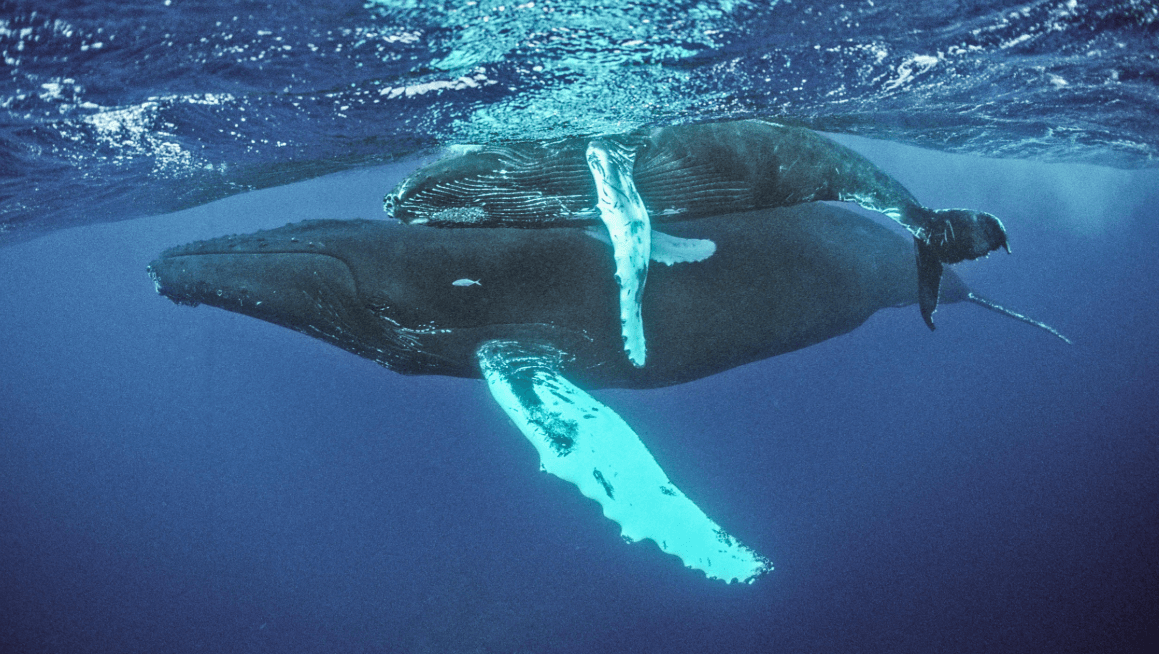
Humpback whale calves are generally seen accompanying their mothers during the breeding and calving season. Their size, behavior, and association with an adult can help observers recognize that they are young animals.
As calves grow, their physical appearance and independence change. Researchers can document these developmental changes through repeated observations and studies of known individuals.
However, identifying a whale as a calf does not necessarily provide its exact age in days or weeks. Observers may not know the precise date of birth, and an animal's apparent size can be affected by viewing conditions and perspective.
For visitors on a whale-watching trip in Samaná Bay, a guide may point out a mother and calf. This can be a valuable opportunity to learn about whale development, even though the calf's exact age may not be known.
3. Following Individual Whales Over Many Years
Long-term research can reveal important information about individual humpback whales.
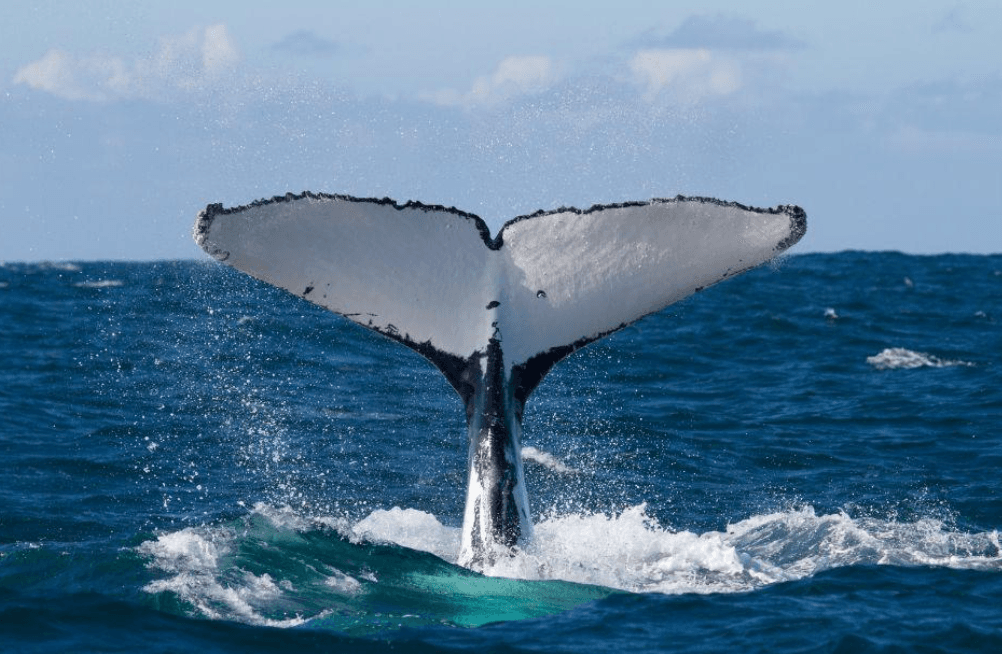
Scientists may use photographs of distinctive body features, including tail-fluke patterns, to recognize whales that have been documented previously. When a whale is identified repeatedly over several seasons, researchers can build a record of its observed history.
If an individual was first recorded as a calf, later sightings may help establish its age more accurately. If it was first photographed as an adult of unknown age, researchers can still determine how many years it has been documented, but this does not establish its total age.
For example, a whale photographed in 2018 and identified again in 2026 has a documented observation history spanning eight years. It could be considerably older than that.
This distinction is essential: the number of years a whale has been observed is not necessarily the number of years it has been alive.
4. Can Scientists Estimate Age From a Whale's Size?
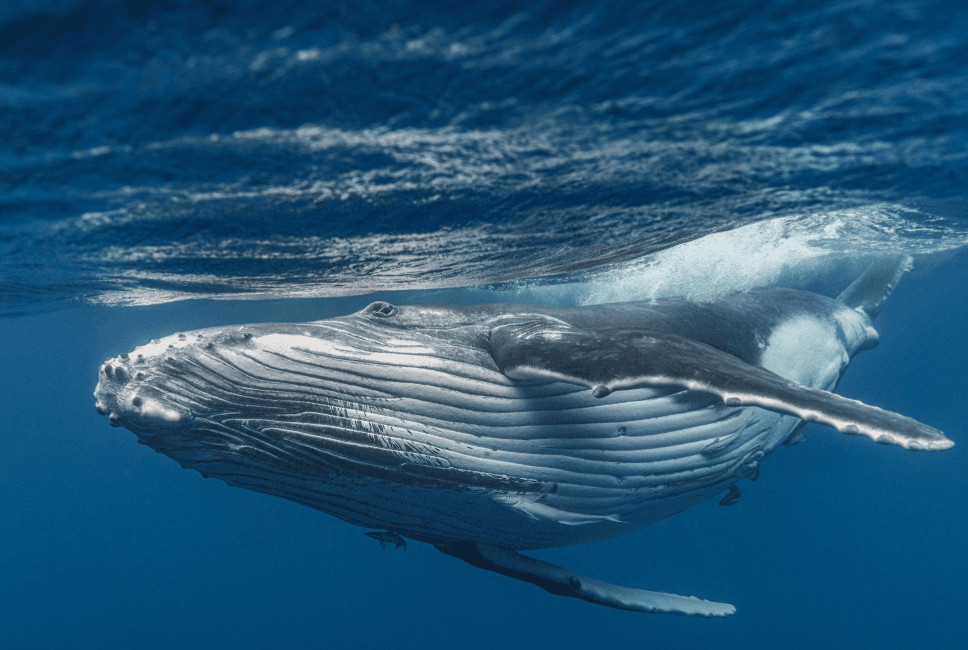
Size can provide some information about development, but it is not a dependable way to determine the exact age of an individual humpback whale.
Humpback whales become much larger as they grow from calves into adults. Nevertheless, growth varies, and adult whales can differ in body size.
A large whale is not automatically old, and a smaller whale is not necessarily young. Sex, individual variation, viewing angle, and uncertainty in estimating length can all complicate comparisons.
Researchers may use measurements in carefully designed studies, especially when studying growth in known individuals. They generally need additional information to make a meaningful age estimate.
During a whale-watching excursion, visitors should therefore avoid assuming that the largest whale in a group is the oldest.
5. Studying Biological Samples
Scientists can sometimes estimate the age of a whale using biological material collected under appropriate research conditions.
For certain whale species, researchers have studied structures such as earplugs, which may preserve layers associated with changes over time. These layers can sometimes provide information useful for estimating age.
However, this is not a routine method for determining the age of a living humpback whale during a whale-watching excursion. Obtaining such material generally involves specialized scientific procedures and, in many cases, a whale that has died or been examined through permitted research.
Researchers must also consider the limitations of the method and the condition of the sample.
This illustrates a broader principle in wildlife science: a technique that works for one species or under one set of circumstances cannot automatically be applied to every whale.
6. Can Scientists Tell a Whale's Age by Looking at Its Teeth?
Humpback whales are baleen whales, not toothed whales. Instead of using teeth to capture prey, they have baleen plates that help filter food from the water.
Consequently, methods based on counting layers in teeth from toothed whale species cannot simply be transferred to humpback whales.
Researchers studying humpback whales need methods appropriate to their anatomy and the evidence available.
This is one reason estimating the age of a living humpback whale can be difficult. There is no simple external feature that consistently reveals an exact age.
7. What Can Scientists Learn About Older Whales?
Even when the exact age of an individual is unknown, researchers can learn about longevity and survival by studying populations over many years.
Repeated observations of identified whales can establish minimum known ages. Records of individuals observed across multiple decades can provide evidence that humpback whales can live for many decades.
Researchers may combine these long-term records with other scientific evidence to study survival patterns and estimate demographic characteristics across a population.
It is important to distinguish between a minimum known age and an estimated total lifespan. A whale documented for 25 years has been known to researchers for at least that period, but it may have been alive long before its first recorded sighting.
Similarly, a population-level estimate does not reveal the exact age of every whale in that population.
Why Is It Difficult to Determine the Exact Age of a Wild Humpback Whale?
Several challenges make age estimation difficult.
Birth dates are often unknown. Many whales are first documented long after they were born.
Individuals can be difficult to identify. Poor photographs or incomplete sightings may prevent researchers from matching the same whale across years.
Adult size is not an age indicator by itself. Body length and appearance cannot reliably distinguish a middle-aged whale from an older adult.
Research methods have limitations. Some techniques require specialized samples or information that is unavailable for a living whale.
The ocean is vast. Even long-term research programmes cannot observe every individual continuously throughout its life.
Scientists account for these limitations by distinguishing confirmed ages from estimates and by explaining how their conclusions were reached.
What Does Whale Age Research Mean for Visitors to Samaná Bay?
Visitors do not need to know a whale's exact age to appreciate an encounter. Understanding the different stages of a whale's life can nevertheless make the experience more meaningful.
During the main humpback whale season, visitors may observe adults, mothers with calves, and other individuals whose precise ages are unknown.
You can ask your guide whether a whale has been identified previously or whether researchers have documented similar individuals in the area. If a particular whale has a known research history, the guide may be able to share verified information.
Remember that an adult whale's appearance does not reveal its exact age. Responsible guides should distinguish between a confirmed research record and a reasonable but uncertain interpretation.
Frequently Asked Questions
How old can humpback whales live to be?
Humpback whales can live for several decades, and some may reach ages of 80 years or more. Exact longevity varies, and determining the age of a wild individual is often difficult.
Can scientists determine the exact age of every humpback whale?
No. Exact ages are easiest to establish for individuals whose births were documented or whose early histories are otherwise known. Many whales are first observed when their ages are already uncertain.
Can a whale's size reveal its age?
Size can help researchers study growth, but it cannot reliably determine an individual whale's exact age. Adult humpback whales vary in size.
How do scientists recognize the same whale over several years?
Researchers may compare photographs of distinctive features, particularly the underside of the tail flukes. Reliable identification allows sightings from different years to be linked to the same individual.
Are humpback whale calves always newborns?
Not necessarily. A calf accompanying its mother is a young whale, but its exact age may be unknown unless researchers have information about when it was born.
Can tourists help scientists learn about whale age?
Tourists can sometimes contribute useful photographs and observations to appropriate research projects. However, age estimates require reliable identification and supporting evidence; a single photograph usually cannot establish a whale's exact age.
Final Thoughts
Estimating the age of a humpback whale requires more than observing its size or appearance. Scientists may rely on known birth records, repeated identification over many years, developmental observations, and specialized biological research.
Each method provides different information, and not every whale can be assigned an exact age.
In Samaná Bay, observing humpback whales offers visitors an opportunity to learn about the lives of these remarkable animals. Understanding how researchers study age also highlights the value of long-term observation and careful scientific records.
The next time you see a humpback whale, remember that its visible appearance tells only part of its story. Its age, history, and previous journeys may remain unknown, but continued research can gradually reveal more about the lives of these extraordinary ocean travelers.

Local explorer & expert guide in Los Haitises Park Tours.